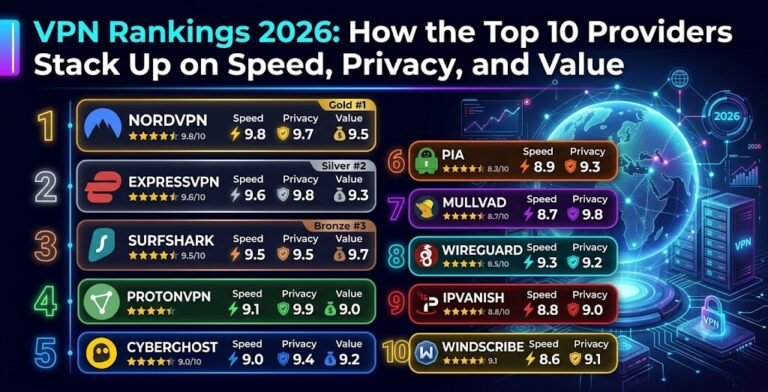
With dozens of VPN providers competing for attention, narrowing it down to the ones actually worth paying for makes the decision a lot easier. Based on current 2026 performance data, pricing, and feature sets, here’s how the top providers stack up.
1. NordVPN — Best Overall
NordVPN’s combination of speed (thanks to its NordLynx protocol), a massive 9,000+ server network, and a genuinely useful security suite (Threat Protection, Meshnet, Double VPN) makes it the safest all-around recommendation for someone who wants one VPN to handle everything from streaming to public WiFi safety.
2. Surfshark — Best Value
Unlimited simultaneous device connections at one of the lowest long-term price points in the market make Surfshark the clear pick for budget-conscious users or households with a lot of devices to cover.
3. ExpressVPN — Best for Broad Device and Router Compatibility
ExpressVPN’s biggest strength is compatibility — it’s one of the easiest VPNs to set up on smart TVs, streaming boxes, and consoles (via its Aircove router), in addition to the usual phone and laptop apps. Speeds are strong thanks to its Lightway protocol, though pricing sits above Surfshark’s.
4. Proton VPN — Best for Privacy-First Users
Swiss-based and independently audited, Proton VPN is the strongest pick for users who prioritize verified no-logs privacy above all else. It also offers a genuinely usable free tier — rare among reputable VPN providers — making it a good way to test the service before committing.
5. IPVanish — Best for Raw Speed
With 3,200+ servers across 150+ locations, IPVanish has posted some of the fastest raw speed test results among mainstream providers, occasionally outperforming bigger-name competitors on specific regional routes.
How to Choose
If you only need one recommendation: NordVPN covers the widest range of use cases well. If price is the deciding factor, Surfshark’s unlimited-device model is hard to beat. If you’re a privacy purist, Proton VPN’s audited no-logs policy stands out.
A Note on Free VPNs
None of the five providers above are free, and that’s intentional — free VPNs consistently underperform on speed, server availability, and streaming unblocking, and some have raised legitimate privacy concerns around how they monetize “free” access. For anything beyond occasional casual use, a paid provider is worth the cost.
About the Author